A roof with a light covering of moss may look like a cosmetic issue, but homeowners are right to ask, is roof moss a problem? In many cases, it is not an immediate emergency. However, when moss becomes thick, holds moisture against the roof covering or starts blocking gutters, it can contribute to problems that are far more expensive than a planned clean or repair.
Moss is particularly common on north-facing roof slopes, beneath overhanging trees and on older properties where tiles have become more porous over time. The Midlands weather gives it plenty to work with: regular rainfall, damp mornings and shaded areas can all encourage growth. The key is not to panic at the first patch of green. It is to understand whether the moss is surface-level or a sign that the roof needs attention.
Is roof moss a problem or just an appearance issue?
A small amount of moss on sound, well-fitted roof tiles is often mainly an appearance concern. It can make a roof look tired, especially alongside black staining, algae and lichen. If the tiles are in good condition, the gutters are flowing freely and there is no sign of damp inside the property, there may be no need for urgent work.
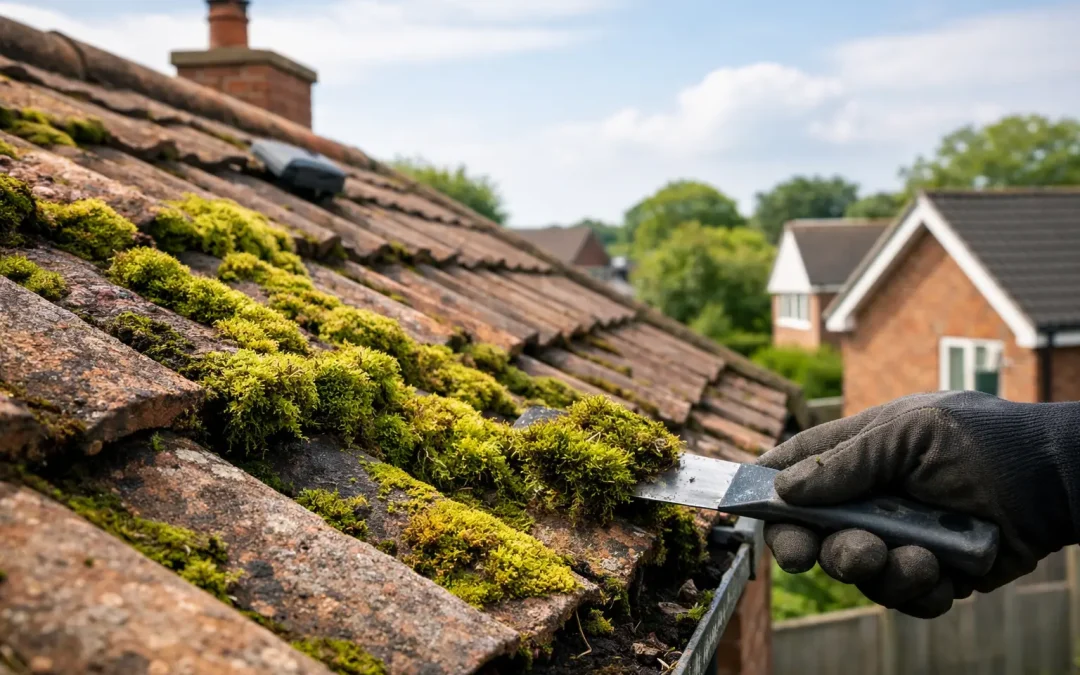
The concern grows when moss forms a dense mat. Moss acts like a sponge, retaining rainwater and slowing down how quickly the roof surface dries. Over a long period, this repeated dampness can worsen wear on ageing tiles, particularly where their protective surface has already deteriorated.
It can also grow around tile edges, in valleys and close to flashing. These are areas where rainwater needs a clear route down the roof. A build-up may interrupt that flow, allowing water to track beneath tiles or collect where it should not. Moss alone does not automatically cause a leak, but it can make existing weaknesses more likely to show themselves.
How moss can affect a roof
The greatest risk usually comes from the way moss collects and moves, rather than from a few green patches on the tiles. During heavy rain, loose moss can wash into gutters and downpipes. Once mixed with leaves, silt and other debris, it can create a stubborn blockage.
Blocked gutters allow water to overflow down walls, onto fascias and soffits, and around the base of the property. In winter, standing water can freeze, adding weight and putting extra strain on gutter brackets. Water overflowing at one point may be mistaken for a roof leak when the real issue is simply poor drainage.
On the roof itself, thick moss can lift slightly as it absorbs water and expands. This does not mean every mossy tile will become loose, but it may expose a tile that was already cracked, poorly seated or damaged by weather. On roofs with worn mortar, ageing ridge tiles or vulnerable valley details, moss can hide the areas that most need inspection.
There is another practical issue: moss makes a roof slippery. Trying to remove it without the correct access equipment and safety measures is risky. A fall from even a low roof can have serious consequences, and walking on fragile or older tiles can lead to avoidable breakages.
Signs that roof moss needs action
It is sensible to arrange an inspection if moss is thick enough to cover large sections of the roof, has accumulated in valleys, or is regularly dropping into the gutters. Moss growing beneath tile edges or around roof junctions also deserves a closer look.
Inside the home, look out for damp patches in the loft, water marks on ceilings, peeling paint near external walls or a musty smell after rain. These signs do not prove that moss is the cause, but they do mean the roof, gutters and roofline should be checked properly.
From ground level, you may also notice slipped tiles, cracked tiles, sagging gutters, overflowing rainwater or vegetation growing from gutter joints. Do not climb a ladder to investigate if you are unsure of the condition of the roof or access. A professional survey can identify whether the issue is moss, blocked drainage, failed flashing or a separate repair requirement.
Should you remove moss from a roof?
In principle, removing heavy moss is often a sensible part of maintaining an older roof. The method matters greatly. Aggressive pressure washing can strip the surface of concrete tiles, force water beneath them and dislodge tiles or mortar. It may make the roof look clean quickly, but it can create problems that were not there before.
A careful approach normally involves removing loose growth by hand or with suitable tools, collecting debris before it enters the guttering, and checking the roof covering as the work progresses. Any cracked, slipped or missing tiles should be repaired rather than hidden beneath a cleaning treatment.
Treatment products can help slow regrowth, but they are not a substitute for sound roof maintenance. Their suitability depends on the roof material, the age of the tiles and the surrounding drainage. Some roofs need a light clean and gutter clearance; others are better served by targeted repairs, replacement tiles or roofline work.
If your roof contains, or may contain, asbestos cement sheets or components, do not clean, scrape or disturb them yourself. Specialist advice is needed to avoid releasing harmful fibres.
Why cleaning is not always the first answer
A roof nearing the end of its serviceable life can look worse after moss is removed because the underlying cracks, erosion and failed repairs become clearer. That is not a reason to leave it untouched. It is a reason to have an honest assessment before spending money on cleaning alone.
For example, if tiles are brittle, several are slipping and the underfelt is failing, a series of small jobs may only delay a more substantial repair or re-roof. Equally, a roof that is structurally sound may only need careful maintenance and improved gutter clearance. The right answer depends on the condition of the whole roof, not just the amount of moss visible from the driveway.
Preventing moss from returning quickly
No roof can be guaranteed to stay completely moss-free, especially in shaded locations. You can reduce the conditions moss prefers by keeping gutters clear, trimming back branches that overhang the roof where appropriate, and making sure rainwater drains correctly through downpipes.
Regular visual checks are worthwhile after autumn leaf fall and periods of severe weather. Look from the ground for accumulations in gutters, changes to tile lines and water running where it should not. Early attention is usually simpler and less costly than waiting until water reaches the inside of the house.
It is also worth avoiding the temptation to coat or seal every roof as a quick fix. Some products are unsuitable for certain tiles and can affect how the roof breathes or drains. A good contractor should explain what is needed, what is not needed, and why.
When to call a roofing professional
Call a roofer when moss is widespread, gutters are repeatedly blocking, tiles appear damaged, or there are any signs of water ingress. An inspection should look beyond the visible growth to assess the tiles, ridges, flashing, valleys, guttering, fascias and soffits.
For homeowners across Nottingham and the wider Midlands, MTF Roofing Ltd can assess the condition of the roof and explain the most practical course of action, whether that is a repair, roofline improvement, gutter work or more extensive roofing work. The aim should be clear advice and work that protects the property, not unnecessary treatment.
Moss is best dealt with before it turns a straightforward maintenance job into blocked gutters, damaged tiles or a damp patch indoors. If you are unsure what is happening beneath the growth, arranging a professional inspection gives you a clear starting point and helps you make a decision with confidence.