
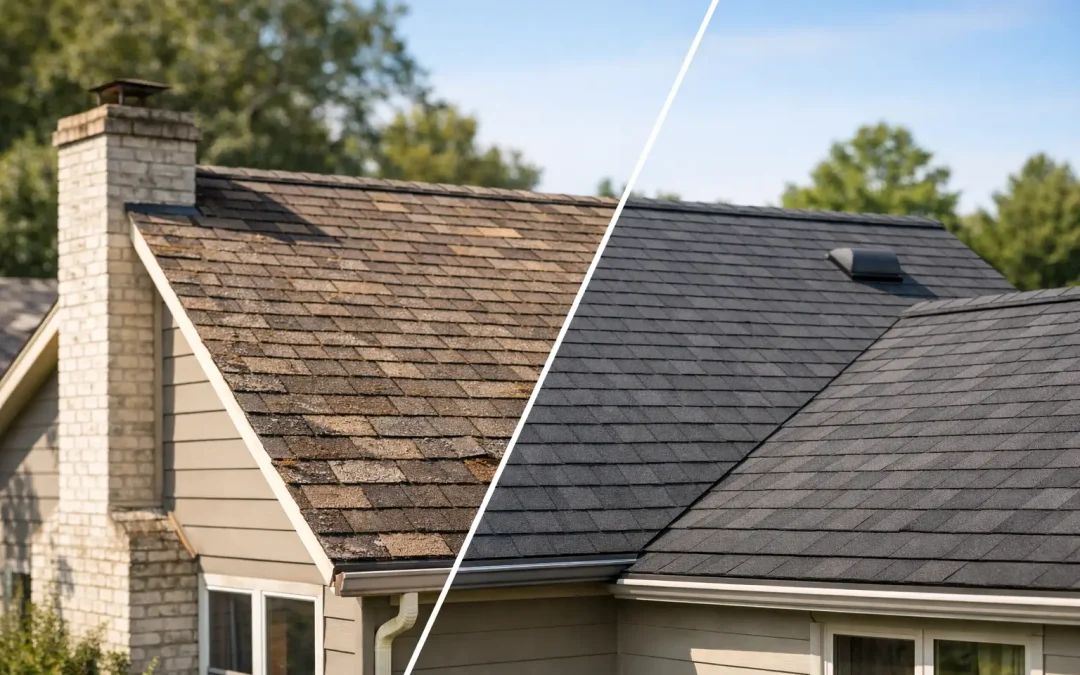
A reroof before and after example is about far more than a new set of tiles. The visible change can be striking, but the real value is in what sits underneath: a dry, secure structure, properly fitted materials and roofline that directs rainwater away from the property. For homeowners, it is often the difference between worrying about the next spell of bad weather and knowing the home is protected.
A tired roof can gradually become part of the background. Slipped tiles, worn mortar, sagging guttering or a faded ridge line may not seem urgent on their own. However, when several signs appear together, a full reroof can be a more dependable and cost-effective answer than repeated patch repairs.
What a reroof changes before and after
Before a reroof, a property may have cracked, missing or mismatched tiles, stained brickwork below leaking gutters, damaged felt at the eaves, and roof edges that no longer look straight or secure. From ground level, these faults can make a well-kept home appear neglected. More importantly, some problems may be allowing wind-driven rain into areas it should never reach.
After the work is completed properly, the roof should look clean, even and in keeping with the property. Tile lines are straight, ridges are secure, verges are neatly finished and the roof covering works as a complete weatherproof system. New fascias, soffits and guttering can transform the outline of the house as well, giving the roof a tidy and finished appearance rather than leaving new tiles beside worn roofline materials.
The most reassuring change is not always immediately visible. A quality reroof gives the installer the opportunity to inspect the deck, timbers, underfelt, battens and flashing while the old covering is removed. Any faults found can be dealt with before the new materials go on. That is very different from placing a temporary repair over a roof that is nearing the end of its working life.
A typical reroof before and after example
Consider a traditional semi-detached home with an ageing tiled roof. The homeowner has noticed occasional damp marks in an upstairs bedroom after heavy rain. Several tiles have slipped over time, ridge mortar is breaking away, and the gutters overflow during downpours. Previous small repairs have helped for a while, but the issues keep returning.
The before picture may show a roof that looks tired rather than disastrous. That is common. Roofs do not always fail in one dramatic moment. Materials weather gradually, fixings weaken, and water finds the smallest opening. By the time a leak is visible inside, there can already be deterioration beneath the tiles.
For a reroof, the existing covering is carefully stripped back so the condition of the roof structure can be assessed. Unsound battens and worn underfelt are replaced, and any timber concerns are identified rather than hidden. New breathable membrane and treated battens are then fitted before the selected roof tiles are installed. The ridge, verges, valleys and flashings receive close attention because these details are where good workmanship matters most.
If the fascias, soffits and guttering are worn, replacing them at the same time can make practical sense. The scaffolding is already in place, and the new roof deserves a roofline system capable of handling rainfall properly. It also avoids the mismatch of fitting fresh tiles above old, stained or damaged plasticwork.
The after result is a roof with an even finish, reliable weather protection and renewed kerb appeal. The homeowner has not simply changed the colour or style of the roof. They have invested in the fabric of the property and reduced the risk of ongoing water damage caused by an ageing covering.
Why the work beneath the tiles matters
It is easy to judge a roof by its finished appearance, but a smart-looking roof is only as good as the preparation below it. Tiles shed the bulk of the rain, while the membrane, battens, flashing and ventilation details support the roof’s longer-term performance.
A professional survey should help establish whether the existing roof needs a full replacement or whether a targeted repair is still appropriate. Not every loose tile means a reroof is required. A localised issue around a chimney, valley or gutter can sometimes be repaired successfully when the remaining roof is in sound condition.
A full reroof becomes more likely when defects are widespread, repairs have become frequent, the underfelt is failing, or the tile covering has reached the end of its useful life. There is a trade-off: reroofing is a larger upfront investment, but it can prevent money being spent repeatedly on short-term repairs that do not address the condition beneath the surface.
Choosing materials that suit the property
The best after image is not necessarily the roof with the most dramatic change. It is the one that suits the home, the surrounding street and the homeowner’s priorities. Tile type, colour and profile should be chosen with care, particularly on older properties where the roof makes up a large part of the home’s character.
Concrete tiles are a practical option for many homes, while clay tiles can provide a traditional appearance. The right choice depends on the existing roof structure, the look required and the budget available. A proper survey can also highlight planning considerations in conservation areas or where the property has particular local character.
For flat roof areas, such as garages, extensions and porches, a modern rubber flat roof can offer a clean, durable finish when installed correctly. The condition of the deck, edge trims, outlets and adjoining flashing all affect the final result. A flat roof should never be treated as an afterthought simply because it is less visible from the road.
What homeowners should expect during a reroof
A reliable roofing contractor should explain the process clearly before work begins. That includes what is being replaced, which materials are included, how long the job is expected to take and how the site will be managed. A written quotation helps prevent uncertainty and makes it easier to compare like for like.
Scaffolding is normally required for safe access. There will be some noise while old materials are removed and new tiles are fitted, but a professional team will work considerately around the household and keep the site organised. Protecting driveways, managing waste and carrying out a proper clean-up are all part of a job done properly.
Weather can affect roofing schedules, particularly when a roof is open during stripping and installation. Experienced roofers plan carefully, protect exposed areas as work progresses and avoid taking risks in unsuitable conditions. Speed matters, but not at the expense of safe fitting or a watertight finish.
Looking beyond the finished photograph
Before and after photographs are useful because they show the visible improvement in the roof, gutters and roofline. They should also prompt the right questions. Was the old roof stripped back and inspected? Were suitable underlay and battens fitted? Were the valleys, flashings and ridge details renewed where needed? Is the contractor insured and willing to stand behind the workmanship?
At MTF Roofing Ltd, the focus is on giving homeowners across Nottingham and the wider Midlands a clear recommendation based on the condition of their property, not pushing work that is not needed. A thorough survey and straightforward quotation provide a better starting point than guesswork from a photograph.
If your roof is beginning to look like the before stage, do not wait for a ceiling stain to make the decision for you. A professional inspection can clarify whether a repair will do the job or whether a reroof is the sensible next step for your home.