
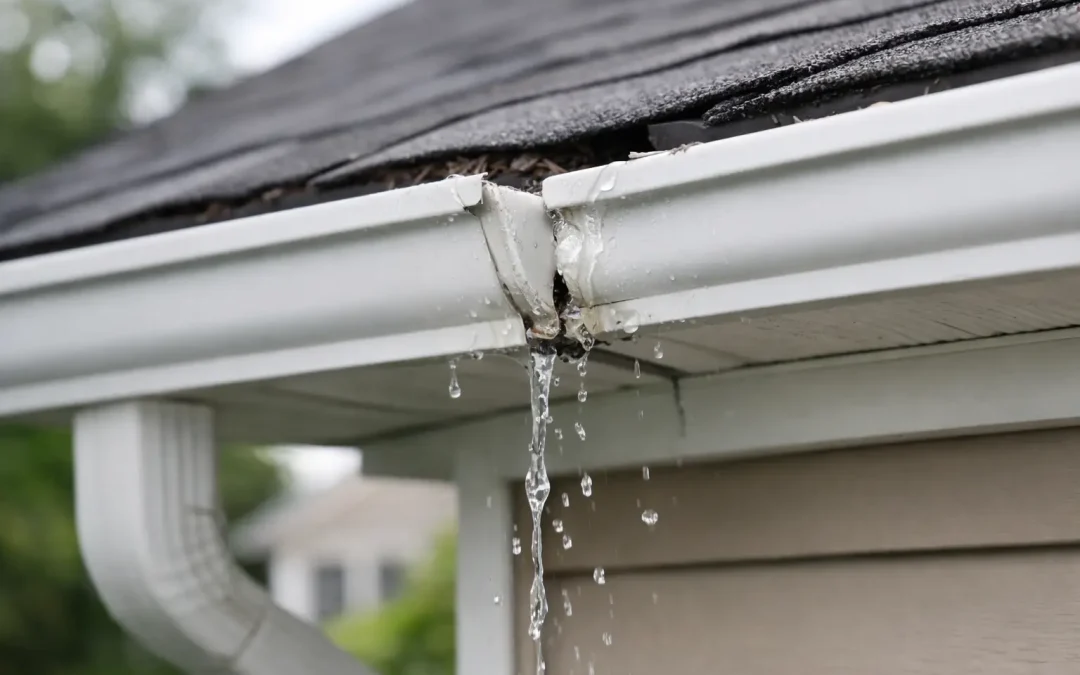
A drip from one gutter joint can look minor from ground level, yet the water may be running down the fascia, soaking brickwork or splashing onto the wall below every time it rains. Homeowners often ask what causes gutter joint leaks, particularly when the guttering itself appears intact. In many cases, the issue is not a hole in the gutter. It is a small failure where two sections meet, made worse by movement, debris or an incorrect fit.
Gutters are designed to carry a large volume of rainwater away from the roofline. If one joint fails, water follows the easiest route out. Acting early helps protect the fascias, soffits, external walls and foundations around your home.
What causes gutter joint leaks?
A gutter joint is the fitting that connects two lengths of gutter, or joins a gutter length to an angle, stop end or outlet. Most modern uPVC systems use a rubber seal inside the fitting to create a watertight connection. Over time, several things can stop that seal from doing its job properly.
Worn, dry or displaced rubber seals
The most common cause is a failed seal. The rubber inside a gutter union is exposed to changing temperatures, sunlight, rain and frost throughout the year. It can harden, flatten, crack or move out of position. Once the seal no longer sits firmly against the gutter section, even a small gap can allow water to escape.
This is especially common on older guttering. The gutter may still look sound from below, but the seals can be well past their best. Replacing a seal or the joint itself is often a straightforward repair when the surrounding gutter is correctly fitted and in good condition.
Expansion and contraction in changing weather
uPVC guttering expands in warm weather and contracts when temperatures fall. That movement is normal, which is why gutter sections need to be installed with the right expansion allowance inside each joint.
If a section has been pushed too far into the fitting, or has not been inserted far enough, it can pull against the seal as the weather changes. A joint may then leak only after a period of very hot, cold or wet weather. This can make the fault seem intermittent, but it will usually return until the joint is adjusted or renewed.
Blockages causing water to back up
Leaves, moss from the roof, twigs and general debris can collect in gutters and downpipes. When water cannot flow freely towards the outlet, it rises in the gutter and sits around the joints for longer. A joint that copes in a normal shower may leak when the gutter is holding standing water during heavy rainfall.
Overflowing guttering is not always caused by a blocked joint. The blockage may be several metres away, or inside the downpipe. However, the pooled water often reveals the weakest connection first. Regular gutter clearing is a sensible part of preventing repeat leaks, particularly for homes near mature trees.
Poor alignment or an incorrect fall
Guttering needs a slight fall towards the downpipe. It should not be noticeably sloping, but it must allow water to run away without sitting in the channel. If brackets have loosened, been spaced too far apart or fitted at the wrong height, a section can sag and hold water around one or more joints.
Poor alignment also places stress on the fittings. The gutter may twist slightly, pull away from a seal or leave an uneven gap between sections. A repair that only replaces the leaking union may not last if the brackets and fall have not been corrected at the same time.
Loose, damaged or incorrectly fitted brackets
Gutter brackets carry more weight than many people realise during a downpour. Add wet leaves, moss or standing water and a gutter run can become heavy quickly. Weak, cracked or loose brackets allow the gutter to dip, shift and strain at its joints.
In some cases, the guttering has been fitted using incompatible components or has been cut poorly at the connection. Different gutter profiles are not always interchangeable, even if they appear similar. A proper repair means checking that the union, gutter sections and brackets are suitable for the same system.
Age, impact and storm damage
Older uPVC can become brittle, especially where it has faced years of direct sun. A ladder knock, a football, strong winds or the weight of snow and debris can crack a fitting or move a gutter section enough to disturb the seal. Storm damage is sometimes obvious, but hairline cracks around a joint can be difficult to see from the ground.
Cast iron and aluminium systems can also leak at joints, although the causes and repair methods differ. Corrosion, failed sealant, loose fixings and movement between sections are more likely than perished rubber seals. The right approach depends on the material and overall condition of the installation.
Signs the leak is doing more than dripping
A wet patch directly beneath a gutter joint is the clearest warning sign, but not the only one. Look for dark staining on brickwork, green growth on the wall, peeling paint around timber fascias, or water marks near windows and doors. You may also notice a concentrated splash mark on paving or soil below the joint.
Inside the property, a gutter leak can contribute to damp around the top of an external wall if water repeatedly runs behind the fascia or down the masonry. It is not wise to assume every damp issue comes from guttering, as roof coverings, flashing and cavity problems can also be responsible. Still, a visible gutter leak should be dealt with promptly rather than left to worsen through another winter.
Can a leaking gutter joint be repaired?
Often, yes. If the guttering is structurally sound and the problem is localised, a professional can remove the affected section, inspect the seal and fitting, clear debris, correct the alignment and replace damaged parts. The gutter should then be tested with water to make sure it drains properly to the downpipe without escaping at the joint.
Applying sealant over the outside of a leaking joint can seem like a quick fix, but it is rarely the best long-term answer for uPVC systems. Sealant may mask the leak while failing to address a distorted fitting, loose bracket, blocked outlet or incorrectly positioned gutter length. It can also make a later repair more difficult.
Replacement becomes the better option when several joints are leaking, the guttering is brittle or sagging, brackets are failing, or the existing system is too small for the roof area. A full replacement allows the roofline to be checked properly and gives the property a clean, consistent finish. There is a cost difference between a small repair and new guttering, so an honest inspection should identify whether targeted work is likely to offer lasting value.
Why access and workmanship matter
Gutter repairs take place at height, often on wet or uneven ground. Climbing a ladder during or after rain is not a sensible way to investigate a leak. More importantly, a repair needs to assess the whole run, not simply the point where water is visible.
A competent roofer or roofline specialist will check the condition of the joints, brackets, outlets, fascia boards and downpipes. They will also look at how water leaves the roof, as excessive moss or a roof valley discharging heavily into one area can overload guttering. The aim is to fix the reason for the leak, not just the symptom.
For homeowners across Nottingham and the wider Midlands, MTF Roofing Ltd can inspect leaking guttering and roofline components, explain the work clearly and provide a no-obligation quotation where repairs or replacement are needed.
A gutter joint that leaks in one shower may become a bigger problem after months of repeated rainfall. If you can see water escaping, staining beneath the roofline or gutters holding water where they should be draining, arranging an inspection now can help keep a manageable repair from becoming damaged timber, damp walls or unnecessary expense.