A stained patch beneath the eaves, gutters that have started to sag, or peeling paint on the front of the house can all point to a roofline problem. Knowing when to replace your soffit and fascia helps you deal with the cause before rainwater reaches the roof structure, walls or loft space.
Soffits and fascias are easy to overlook because they sit at roof level, but they do a serious job. Fascia boards support the guttering along the edge of the roof. Soffit boards close the underside of the eaves, helping to protect the roof space while allowing suitable ventilation. When either begins to fail, the effects can spread beyond appearance.
When to Replace Your Soffit and Fascia
There is no single replacement timetable for every home. The lifespan depends on the material, how exposed the property is, the condition of the gutters and whether maintenance has been kept up. Timber rooflines can last many years with proper care, but repeated wet weather, failed paintwork and blocked gutters can shorten that life considerably.
Replacement is usually the sensible choice when damage is widespread, the boards no longer provide a firm fixing for guttering, or ongoing repairs are becoming a regular expense. A small, localised issue may sometimes be repaired, particularly where the timber is otherwise dry and sound. The key is to establish whether the visible problem is cosmetic or evidence of moisture getting into the board behind it.
Rotting, soft or split timber
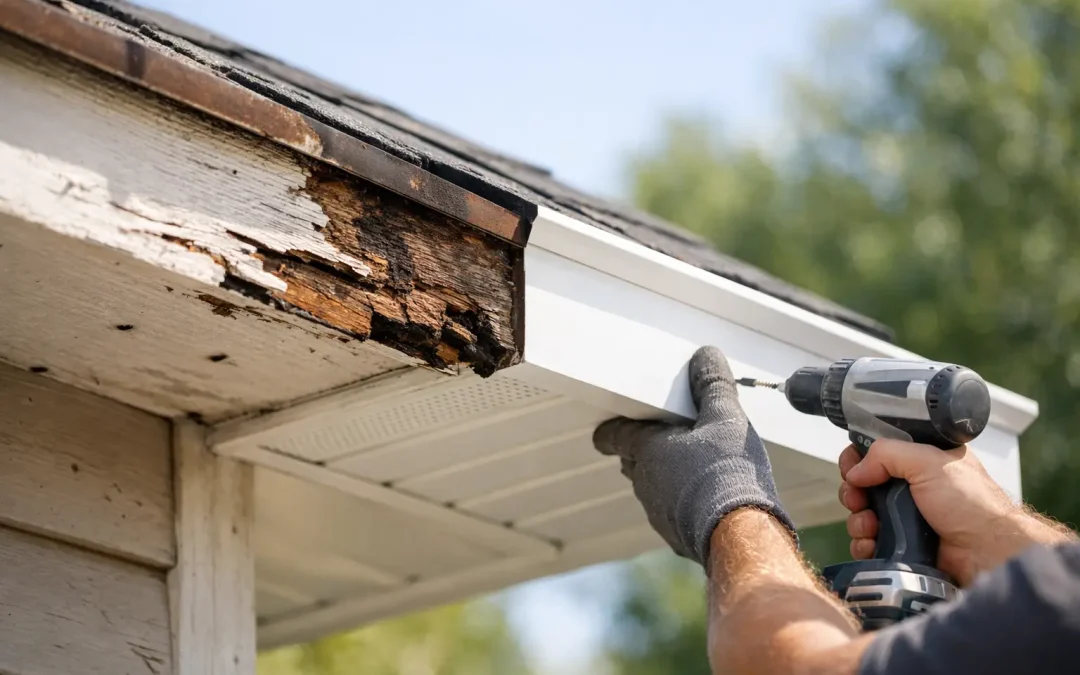
Rot is one of the clearest signs that fascia or soffit boards need attention. Timber that feels soft when carefully tested, flakes away at the edges, splits along the grain or has dark, persistently damp areas may no longer be protecting the eaves properly.
Rot often starts where overflowing gutters repeatedly soak the fascia. It can also develop around joints, behind leaking gutter brackets or where old paint has cracked and allowed water into the timber. Repainting over affected wood may improve the appearance briefly, but it will not restore its strength. If the board has deteriorated, replacement is normally the more reliable option.
Gutters pulling away or sitting unevenly
Guttering should run securely along the fascia with a steady fall towards the downpipe. If brackets are loose, sections bow under the weight of water, or the gutter appears to be pulling away from the roof edge, do not assume the gutter itself is the only issue.
A failing fascia board may no longer hold gutter brackets safely. This matters most during heavy rainfall, when gutters are carrying their greatest load. Refixing brackets into weakened timber is rarely a lasting repair. A proper inspection can confirm whether the guttering, fascia, or both should be renewed.
Peeling paint, swelling and repeated maintenance
Timber fascias and soffits need regular preparation and painting to keep water out. Peeling paint alone does not always mean the boards have failed, especially if caught early. However, paint that repeatedly bubbles, cracks or lifts in the same places is often a warning that moisture is trapped beneath the surface.
Look for swollen edges, open joints and areas where the paint has turned darker or green with algae. If you are facing extensive scraping, filling and repainting every few years, replacing old timber with quality uPVC roofline products can be the more practical long-term decision. It reduces the maintenance burden and gives the roof edge a clean, consistent finish.
Stains, damp patches or mould near the eaves
Water marks on external walls below the gutter line should be investigated promptly. They may be caused by overflowing gutters, but they can also indicate a leaking joint, damaged fascia or poor rainwater flow. Inside the property, staining near the top of an external wall or around the loft eaves deserves particular attention.
Soffits are not designed to stop major roof leaks, but damaged or missing sections can let wind-driven rain, insects and debris into areas that should be enclosed. Ventilation openings also need to remain clear. Blocking them in an attempt to stop draughts can create condensation problems in the loft, so any replacement should allow for the roof’s ventilation needs.
Cracks, holes and signs of pests
Small cracks and gaps can quickly become access points for birds, wasps, squirrels and other pests. Nesting material around the eaves, droppings, scratching sounds in the loft or visible holes in the soffit should not be ignored.
The damaged area may be limited, but it is worth checking the surrounding boards as well. Wildlife can expose weak sections that were already affected by damp. Once the cause has been resolved safely, the roofline should be repaired or replaced so the property is properly sealed again.
Do You Need Repair or Full Replacement?
A trustworthy roofing contractor should not recommend replacing every roofline board simply because one section looks tired. The right approach depends on the overall condition and what is found during a close inspection.
A repair can make sense where damage is confined to a short length, there is no rot behind the surface, and the rest of the fascia remains strong enough to support the guttering. This is more likely on a relatively modern installation or where a single gutter leak has caused a local problem.
Full replacement is often better value when old timber has failed in several places, the guttering is nearing the end of its life, or access equipment is already needed to complete the work safely. Replacing fascias, soffits and guttering together can avoid mismatched sections and repeated disruption. It also gives the installer an opportunity to check the roof edge and correct issues hidden behind old boards.
Be wary of a simple cover-over solution on decayed timber. Capping boards can be suitable in specific circumstances where the existing timber is dry, sound and properly prepared. They should not be used to hide rot. If damaged material is left behind, moisture can continue to cause problems out of sight.
What Happens During a Roofline Replacement?
A good roofline replacement starts with a survey, not a guess from ground level. The contractor should inspect the fascias, soffits, guttering and roof edge, then explain what has been found in plain terms. You should receive a clear quotation covering the scope of work and the materials proposed.
During installation, old boards and guttering are removed as needed so the condition of the eaves can be checked. Any defective timber at the roof edge should be dealt with before new materials are fitted. New fascia and soffit boards are then installed with appropriate ventilation, followed by guttering that is securely fixed and aligned to drain correctly.
The finish matters. Straight lines, neat joints, correctly positioned downpipes and a tidy site are all signs of careful workmanship. Colour is also worth considering. White remains a popular choice, while anthracite grey, black and wood-effect finishes can suit different property styles. The best option is one that complements the windows, brickwork and existing exterior details without compromising quality.
Do Not Wait for Water Damage to Force the Decision
Many homeowners first notice a roofline issue after a period of heavy rain. By then, water may have been overflowing for some time. Checking the gutter line from the ground after rainfall can reveal obvious drips, sagging or water running down the wall. Never climb ladders or walk on a roof to investigate – roofline work is best assessed safely by an experienced professional.
It is also sensible to arrange an inspection if you are planning exterior decorating, replacing windows, or buying an older property. These are useful times to identify work that could be completed together rather than disturbing finished areas later.
For homeowners across Nottingham and the wider Midlands, MTF Roofing Ltd can assess worn or damaged fascias, soffits and guttering, explain the options clearly and provide a free, no-obligation quotation. Addressing a failing roofline early protects more than the appearance of your home – it helps keep rainwater where it belongs, safely directed away from the property.