A new roof changes more than the look of a property. It affects how well your home stands up to rain, wind and winter weather for decades to come. When weighing up roof tiles versus slates, the right answer is not simply the one that looks best from the road. Your roof’s structure, pitch, local character, budget and the condition of the existing covering all need to be considered.
For many homeowners across Nottingham and the wider Midlands, the choice comes down to clay or concrete tiles against natural or fibre cement slates. Each can provide a smart, weatherproof finish when it is fitted properly. The key is choosing a material that suits the property and having the work carried out with the correct preparation, ventilation, fixings and leadwork.
Roof tiles versus slates: the main differences
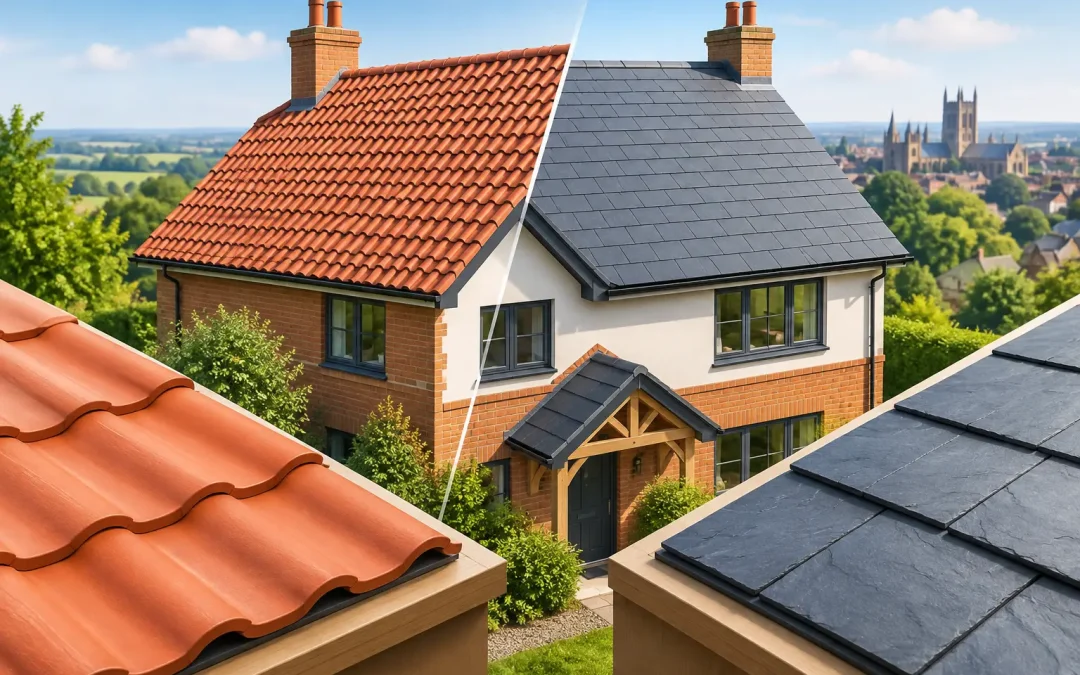
Roof tiles are usually made from concrete or clay. They are larger than slates and come in a broad range of profiles, colours and finishes. Concrete tiles are common on modern and post-war homes, while clay tiles often suit older properties and homes where a warmer, more traditional finish is wanted.
Slates are thinner, flatter units laid in overlapping courses. Natural slate is split from stone and has a distinctive, varied appearance. Fibre cement slates are a manufactured alternative, offering a consistent finish and lower material cost than natural slate. Both are regularly used on pitched roofs, but they create a very different appearance.
The first visual difference is the roof line. Tiles can give a roof more depth and texture, particularly with profiled concrete tiles or pantiles. Slates create a flatter, finer pattern that is often associated with Victorian terraces, period homes and properties in conservation areas. Neither is automatically better. A tile roof can look completely in keeping on one street, while slate may be the only sensible choice on another.
Appearance and suitability for your property
The existing roof covering is usually the best starting point. Replacing a worn-out roof with a similar material often keeps the property in character and avoids unexpected planning or conservation issues. A slate roof on a traditional home may be worth retaining in slate, especially where neighbouring properties follow the same style.
That does not mean every old roof must be replaced like for like. If the roof needs major structural work, if budget is limited, or if a different material better suits the home, there may be good reasons to change. The important point is to check what is practical before ordering materials.
Concrete tiles offer plenty of choice and can be selected to complement many property styles. They are popular because they provide a neat, durable finish without the cost of premium natural slate. Clay tiles tend to hold their colour well and develop character over time, although their suitability will depend on the roof pitch and the detail of the roof design.
Natural slate has a finish that manufactured materials cannot fully copy. Its colour variation and texture can make a real difference to a period property. Fibre cement slate is more uniform but remains a practical option where the appearance of slate is preferred without the higher cost of natural stone.
Weight matters, but it is not a simple tile-versus-slate question
Homeowners are often told that tiles are heavy and slate is light. There is some truth in that, but it depends entirely on the product. Concrete tiles can place a significant load on a roof. Natural slates also vary in thickness, size and weight, while fibre cement slates can be considerably lighter.
Before a re-roof, the roof structure should be inspected properly. Rafters, timbers, battens and the condition of the supporting walls all matter. This is particularly important when changing from slate to concrete tile, or when a property has had previous alterations. A roof should never be treated as a surface covering alone.
The underlay, battens, fixings and ventilation also form part of the finished system. Using quality materials is only one side of the job. Correct fitting is what helps prevent slipped units, water ingress, condensation and premature wear.
Lifespan and maintenance
A well-installed natural slate roof can last for a very long time. In some cases, individual slates can be repaired or replaced without disturbing large areas of the roof. However, the lifespan depends on the quality of the slate, the fixing method, exposure to the weather and the condition of the roof beneath it.
Clay tiles also have an excellent lifespan and are known for retaining their appearance over many years. Concrete tiles are a reliable and widely used option, though their surface can weather and lose some of its original colour over time. That does not necessarily mean the roof has failed. It is the condition of the tiles, mortar, underlay, flashings and fixings that needs to be assessed.
All pitched roofs benefit from occasional checks, particularly after severe wind. Look out for slipped or cracked tiles, missing slates, loose ridge tiles, damaged lead flashings and blocked gutters. Small problems are generally more straightforward to deal with when found early, before rain reaches the roof space or causes damage to ceilings and timbers.
Moss is another concern homeowners often raise. It is common on shaded roofs and can hold moisture against the covering. Care is needed with cleaning. Aggressive pressure washing can damage tiles, disturb pointing and force water where it should not go. A proper assessment should come before any cleaning work is recommended.
Cost: look beyond the material price
Material cost matters, but it should not be the only figure used to compare roof tiles and slates. The overall cost of a re-roof includes safe access, removal and disposal of the old covering, timber repairs where needed, breathable membrane, battens, fixings, leadwork, ridge and verge details, guttering adjustments and making good at the end.
Natural slate will usually cost more than concrete tile, both because of the material and the skilled labour involved in laying it. Fibre cement slate may reduce the initial spend, although it will not offer the same lifespan or natural variation as quality stone slate. Clay tile can also be a higher-cost option than standard concrete, depending on the range selected.
A cheaper quotation is not always a better quotation if it leaves out essential items or relies on poor-quality materials. Ask what is included and whether the contractor has allowed for likely repairs found once the old roof is stripped. A clear survey and written quotation give you a far better basis for deciding than a rough price given from the ground.
Roof pitch, weather and detailing
Every roof covering has minimum pitch requirements. Put a material on a roof that is too shallow, and water may not shed as it should. The exact pitch, exposure of the property and manufacturer guidance should all be checked before a final choice is made.
This matters on extensions, porches and dormers as much as on the main roof. A material that works well on a steep Victorian roof may not be suitable for a lower-pitched rear addition. Valleys, chimneys, roof windows and junctions also need careful detailing, as these are the areas where many leaks begin.
In the Midlands, roofs need to cope with heavy rain, frost and strong gusts as well as everyday weathering. Whether the covering is tile or slate, secure mechanical fixing and tidy leadwork are essential. Mortar alone should not be relied upon where modern fixing methods are required.
When repair is enough and when replacement makes sense
A few broken tiles or slipped slates do not automatically mean a full re-roof is needed. Localised repairs can be a sensible and cost-effective option where the wider roof remains sound. Replacing damaged units, renewing leadwork or repairing a ridge can extend the serviceable life of the roof.
Replacement becomes more likely where there are widespread failures, repeated leaks, deteriorated underlay, extensive cracking, failing battens or signs that the roof has reached the end of its working life. If scaffolding is needed repeatedly for separate repairs, a planned re-roof may offer better value and greater peace of mind.
A proper inspection should explain the condition clearly rather than pushing one solution. At MTF Roofing Ltd, the aim is to give homeowners a straightforward view of what the roof needs, what can wait and what should be dealt with before further damage develops.
The best choice is the one that respects your home, suits the roof structure and is installed with care from the first batten to the final ridge. If you are unsure whether tiles or slates are right for your property, arrange a survey before making a decision. A clear assessment can save money, prevent avoidable problems and leave you with a roof that looks right and does its job properly.