
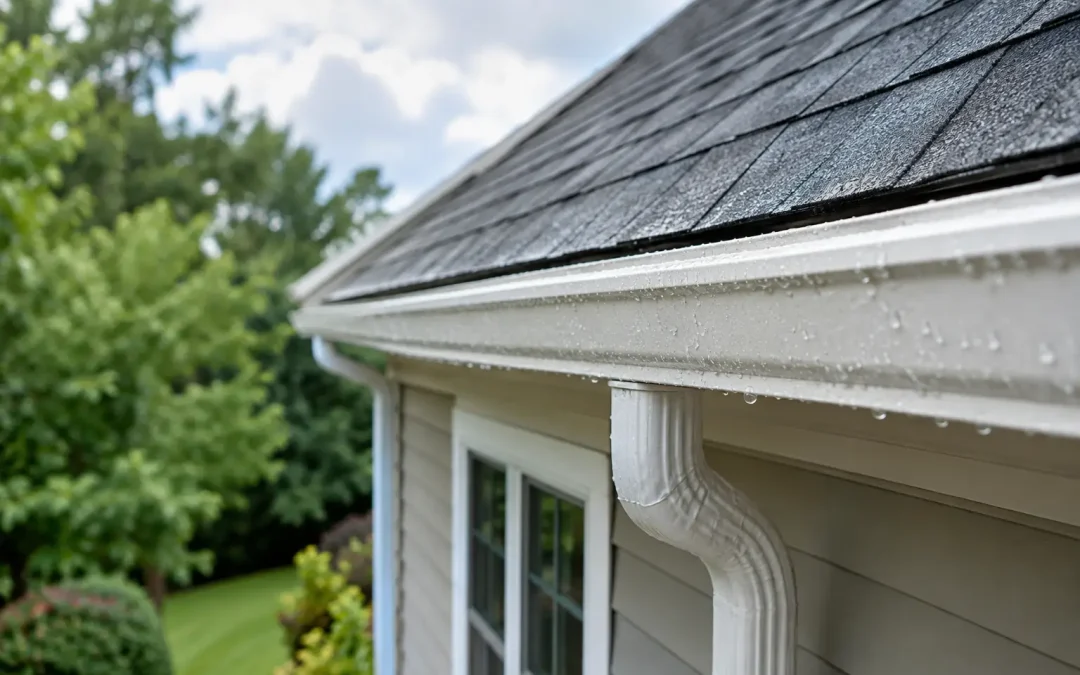
A gutter can look like a simple strip of plastic or metal at the edge of a roof, but it has a demanding job. During a Midlands downpour, hundreds of litres of water can run off a typical roof. If that water is not directed safely away, it can end up against brickwork, beneath the roofline or around the base of the house. So, are gutters essential? For most homes, yes. Properly fitted and maintained guttering is one of the most effective ways to protect the parts of a property that are expensive to repair.
Are Gutters Essential on Every House?
Most pitched-roof homes need gutters. They collect rainwater as it leaves the roof and carry it through downpipes to a suitable drainage point. Without them, water falls directly from the eaves, repeatedly soaking the ground, walls and roofline below.
There are a few exceptions. Some buildings are designed with deep overhanging eaves, particular drainage arrangements or carefully planned ground finishes that can cope with runoff. Older properties may also have been built without conventional gutters. Even then, the question is not simply whether water can fall freely from the roof. It is whether it can do so without damaging the building, splashing back onto walls or creating persistent wet areas around it.
For the average detached, semi-detached or terraced home in Nottinghamshire and across the Midlands, gutters are not an optional finishing touch. They are part of the property’s rainwater management system.
What Happens When Guttering Is Missing or Failing?
Water always finds the easiest route. When gutters are absent, blocked, leaking or poorly aligned, it often finds routes that cause problems over time rather than immediate dramatic damage. That is why guttering issues are easy to overlook until staining, damp or rot becomes visible.
Damp patches and marked brickwork
Rainwater pouring over an edge of the roof can run down external walls. Repeated saturation may leave dark staining, encourage moss growth and allow moisture to work into small cracks or defective pointing. Cavity walls offer protection, but they are not a reason to leave water running down the outside of a home day after day.
At windows, doors and wall junctions, excess water can expose weaknesses in seals and render. In colder weather, trapped moisture can freeze and expand, making small faults worse.
Damage to fascias, soffits and the roof edge
A leaking joint or overflowing gutter often sends water behind the gutter rather than into it. This can soak timber fascias and soffits, leading to peeling paint, staining and eventually rot. Modern uPVC roofline products are low maintenance, but they still rely on guttering being securely fixed and correctly positioned.
The roof edge is particularly vulnerable because it is where water leaves the tiles or slates. If the gutter sits too low, too far away or has pulled loose, water can miss it altogether. If it sits incorrectly beneath the roof covering, it can affect the lower edge of the roof and the supporting timbers behind it.
Problems around foundations and paths
Water dropped from roof height does not just disappear. It hits the ground with force, splashes onto walls and can create channels in soil or flowerbeds. Where runoff gathers close to the property, it may contribute to saturated ground, puddling on paths and damp conditions around the base of external walls.
Gutters cannot solve every drainage issue, especially where ground levels are too high or drains are already blocked. However, they prevent roof water from being added to the problem in the first place.
Slippery areas and damage to finishes
Overflowing gutters often show themselves on driveways, patios and entrances. Constant runoff can encourage algae, make paving slippery and leave unsightly marks. It can also affect painted surfaces, timber cladding and rendered walls. These may seem like cosmetic concerns at first, but they are often signs that water is going where it should not.
Gutters Protect More Than the Walls
Good guttering works as part of a wider roofline system. The roof covering sheds rain, the gutter catches it, the downpipe carries it away, and the fascias and soffits provide a secure, neat edge beneath the roof. When one part fails, the others can be affected.
This is why replacing gutters without checking the condition of the fascias, soffits and fixings is not always the best answer. A gutter fixed into rotten timber will not remain secure for long. Equally, new roofline boards should be fitted with correctly sized guttering and brackets that can cope with the weight of heavy rainfall and debris.
At MTF Roofing Ltd, roofline work is approached as practical protection for the home, not just a way to freshen up its appearance. A clean, well-fitted system should improve the look of the property, but its main purpose is to keep rainwater under control.
Signs Your Gutters Need Attention
A quick look from ground level after rainfall can reveal a lot. Water spilling over the front of a gutter, dripping from a joint or running down the wall below a downpipe all point to a problem worth dealing with.
Other common warning signs include sagging lengths of gutter, brackets pulling away from the fascia, plants growing from the channel, visible cracks, loose downpipes and damp marks beneath the roofline. You may also notice water pooling at the foot of a wall or hear a persistent drip after rain has stopped.
Do not assume an overflow is always caused by leaves. Blockages are common, particularly near trees, but poor falls are another frequent cause. Gutters need a slight, consistent slope towards the downpipe. If they have been fitted unevenly, moved over time or become weighed down by standing water, they may overflow even when they appear clear.
Repair, Clean or Replace?
The right approach depends on the condition of the system. A sound gutter with a local blockage may only need clearing and checking. A loose bracket, failed seal or isolated leaking joint can often be repaired if the rest of the run is in good order.
Replacement is usually more sensible where guttering is brittle, cracked in several places, badly sagging, repeatedly leaking or nearing the end of its working life. It may also be the right time to upgrade if old cast-iron or ageing plastic gutters no longer suit the property or are difficult to maintain.
The material and profile should suit the home. Standard uPVC guttering is a practical, durable choice for many properties and is available in colours that complement existing roofline finishes. Larger-capacity systems may be appropriate for broad roofs or areas exposed to heavy runoff. The aim is not to fit the biggest gutter possible, but to fit a system with the correct capacity, fall, outlets and support.
Why Correct Fitting Matters
Even quality materials will not perform properly if they are fitted carelessly. Guttering needs secure brackets at suitable intervals, watertight joints, a clear fall towards each outlet and downpipes positioned to discharge into an appropriate drain or gully. The roof tiles, fascia line and wall details all need to be considered.
Poor installation can create the same issues as old guttering. A gutter that is level rather than angled can hold water and collect debris. One with too few brackets may bow under weight. A downpipe that discharges beside the wall instead of into drainage can simply move the problem from roof level to ground level.
This is also not a job that should involve climbing onto ladders without the right equipment or experience. Gutters are close to roof edges, and a small repair can become unsafe quickly. A professional survey can identify whether the issue is a straightforward repair, a cleaning problem or a wider roofline concern.
Looking After Your Guttering Through the Year
Guttering does not need constant attention, but regular checks make a real difference. Clearing leaves and moss after autumn is sensible, particularly if there are overhanging trees. It is also worth checking after strong winds, as debris can lodge around outlets and brackets can be affected.
During winter, keep an eye on overflow points and downpipes after prolonged rain. In spring, look for movement, cracks or joints that have opened after freezing conditions. If you are planning roof repairs, a re-roof or replacement fascias and soffits, ask for the rainwater system to be assessed at the same time.
A properly installed gutter system should work quietly in the background. When it does, rainwater is carried away from the roofline, walls and foundations before it has the chance to cause trouble. If yours is overflowing, sagging or showing its age, dealing with it early is usually simpler and more cost-effective than waiting for the water damage to appear.