A roofline can look tidy from the pavement while problems are quietly developing behind the gutters. Water overflowing in one corner, paint peeling beneath the eaves or a gutter that no longer sits straight can all point to deterioration in the fascias, soffits and supporting timbers.
Knowing how to spot roofline damage early helps you make a sensible decision before damp, rot or repeated water damage affects more of the property. For many older homes, the issue is not one isolated defect. It is a roofline that has reached the end of its useful life and needs a properly planned replacement alongside wider roofing work.
What Is Included in Your Roofline?
Your roofline is the visible edge where the roof meets the walls of your home. It usually includes fascias, soffits, gutters and downpipes. Each part has a practical job: fascias support the guttering, soffits help ventilate the roof space, and gutters carry rainwater safely away from the building.
When these components are working well, they protect the eaves, brickwork and foundations from regular exposure to water. When they deteriorate, water can run behind the guttering, soak into timber and leave the roof edge vulnerable. This is why roofline condition should be considered alongside the age and condition of the roof covering itself.
How to Spot Roofline Damage From Ground Level
You should never need to climb a ladder to identify the first signs of trouble. A clear look from ground level, ideally after rainfall and again on a dry day, often reveals whether further assessment is needed.
Gutters That Sag, Lean or Overflow
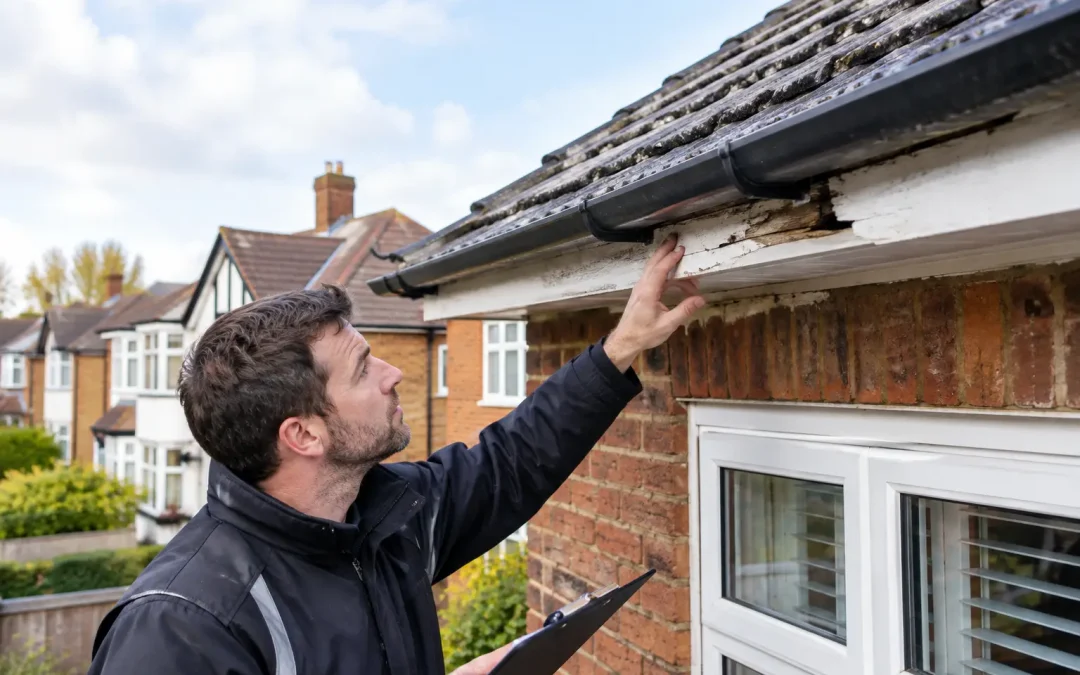
A gutter should follow a clean, consistent line along the edge of the roof. If sections dip, pull away from the fascia or appear uneven, the brackets may be failing or the fascia board behind them may no longer provide a secure fixing.
Overflowing gutters are also worth investigating. Leaves and debris can certainly cause a temporary blockage, but frequent overflow in the same place may mean the fall is incorrect, the outlet is poorly positioned or the guttering has distorted. Water spilling over the front or back of a gutter does not simply disappear. It can stain walls, saturate the ground below and work its way into the eaves.
Peeling Paint and Stained Timber
Traditional timber fascias and soffits need regular maintenance. Flaking paint, dark staining, cracking or soft-looking timber usually means moisture has begun to affect the boards. Pay close attention to joints, corners and areas beneath gutter unions, as these are common places for water to escape.
Fresh paint can improve appearance for a while, but it is not always a lasting answer. If timber has already softened or rotted, painting over it can conceal the problem rather than resolve it. A full fascia, soffit and guttering replacement is often the more reliable option where deterioration is widespread.
Gaps Around the Eaves
Look for visible gaps where the soffit meets the wall or fascia. Small openings can allow birds, insects and wind-driven rain into areas that should be protected. Loose soffit panels may also indicate failed fixings or damp damage behind the surface.
Ventilation openings are different. Purpose-made vents should look neat and deliberate, allowing air to move through the roof space without leaving it exposed. Irregular gaps, sagging panels or broken sections should be assessed by an experienced roofer.
Damp Marks on External Walls
Brown or green staining on brickwork, render or cladding beneath the roof edge can be a warning sign. It may be caused by overflowing gutters, leaking joints or rainwater tracking behind the fascia. Moss growth can also indicate that the area remains wet for too long.
The source is not always immediately obvious. Water can travel along a fascia or under a gutter before appearing several feet away, so the visible stain may not sit directly beneath the fault. A professional inspection helps identify the cause rather than guessing from the symptom.
Signs Inside the House and Roof Space
Roofline damage can sometimes show itself indoors first. During daylight hours, check the top corners of upstairs rooms and ceilings for discolouration, peeling wallpaper or recurring patches of damp. These can have several causes, but defects around the eaves should be considered, particularly after heavy rain.
If it is safe to access your loft, look for damp insulation near the outer edges, water marks on timbers or a musty smell. Do not disturb insulation or walk on unsupported areas. The purpose of a simple visual check is to spot concerns, not to diagnose the whole roof from inside.
A cold, poorly ventilated loft can contribute to condensation, while water ingress can lead to similar-looking marks. This is one reason a proper assessment matters. The right solution depends on whether the problem comes from ventilation, failing roof materials, gutters, fascias or a combination of issues.
When Roofline Damage Points to a Bigger Roofing Project
An ageing roofline often goes hand in hand with an ageing roof. If roof tiles are slipping, mortar is breaking down, the roof surface looks uneven or there are signs of moisture in the loft, replacing only the guttering may not offer the long-term protection your home needs.
This is especially relevant when the existing roof is approaching the end of its expected serviceable life. A complete re-roof provides the opportunity to renew the roof covering, address underlying timber where required and install new fascias, soffits and guttering as one coordinated job. It also avoids fitting new roofline materials only to remove or disturb them later during a roof replacement.
The same principle applies to flat roof areas over extensions, garages and porches. Cracked edges, pooling water and damaged trims can affect how water drains into the guttering. Where a flat roof covering is deteriorating, replacement with a suitable modern system such as EPDM may provide a more dependable result than ongoing patchwork.
Why Replacing the Whole Roofline Can Be Better Value
There is a natural temptation to replace only the most visibly damaged section. That may be reasonable where the rest of the roofline is modern, secure and in good condition. However, piecemeal work can create mismatched materials and leave older boards supporting new guttering elsewhere.
For homes with widespread staining, tired timber, brittle guttering or repeated leaks, a full replacement offers a consistent finish and a clearer long-term solution. Modern uPVC fascias, soffits and guttering are low maintenance, resist rot and can greatly improve the appearance of the property when installed correctly.
The quality of fitting matters as much as the materials. Gutters need the correct fall, fascias need secure fixings, and the roof edge must be finished so rainwater drains where it should. Poor installation can cause the same problems to return, even with new components.
Arrange a Professional Assessment Before Damage Grows
If you have noticed more than one warning sign, it is sensible to arrange an assessment rather than waiting for the next period of heavy weather. Take a few photographs from ground level, note when overflow or damp marks occur, and avoid attempting work at height yourself.
MTF Roofing provides honest advice for homeowners considering significant roof, flat roof and roofline improvements across Nottinghamshire, Derbyshire and surrounding areas. With more than 15 years of hands-on experience, the team can assess the condition of your roofline and explain whether a full replacement is the right course of action.
A free, no-obligation quotation gives you a clear basis for planning the work properly. A sound roofline does more than make a home look cared for – it helps every part of the roof do its job when the weather turns.