A loft can look dry and tidy from the hatch while moisture is quietly building beneath the roof covering. To maintain loft ventilation properly, air must be able to move through the roof space without rain, pests or insulation blocking its route. This matters most in winter, when warm, moisture-laden air from the home meets cold roof timbers and underfelt.
Poor ventilation is not always a small maintenance issue. On an ageing roof, repeated condensation can contribute to damp insulation, mould growth and timber deterioration. If the roof is already approaching the end of its working life, ventilation should form part of a properly planned replacement rather than an afterthought.
What loft ventilation is designed to do
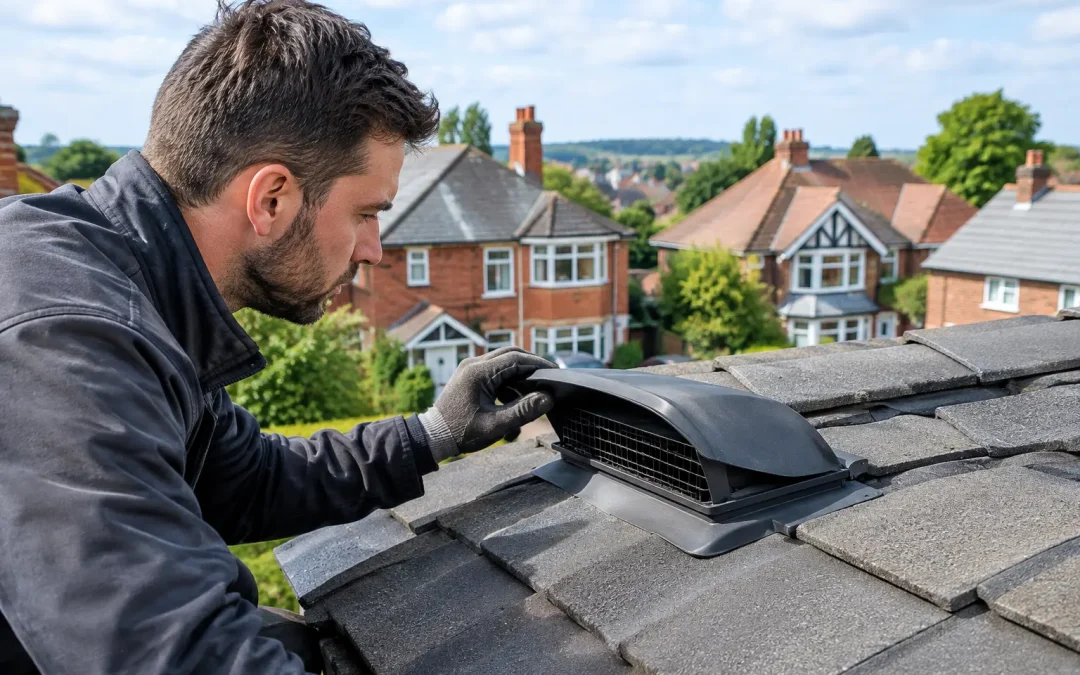
Most pitched roofs need a controlled flow of air through the loft. Fresh air usually enters at the eaves, often through ventilated soffits or discreet eaves vents, and leaves higher up through tile vents, ridge ventilation or other suitable outlets. The exact arrangement depends on the roof design, its pitch, the membrane beneath the tiles and whether the loft is cold or insulated at rafter level.
This airflow helps remove moisture before it settles as condensation on the underside of the roof. It also helps keep roof timbers and insulation in better condition. Ventilation is not intended to make a loft draughty for the sake of it. It is a practical part of a roof system that needs to be balanced with good insulation and a well-sealed ceiling below.
A cold loft with insulation laid across the ceiling joists needs a clear ventilation path above that insulation. A converted loft or a roof insulated along the rafters has different requirements and should be assessed as a complete build-up. There is no one-size-fits-all answer.
Signs your loft ventilation needs attention
A quick look in the loft can reveal useful clues, particularly during colder months. A musty smell, water droplets on the underside of the membrane, staining on timbers or mould around the eaves can all point to trapped moisture. Insulation that looks damp, flattened or discoloured also needs attention.
Outside, peeling paint to timber fascias, decayed soffits and staining around the roofline may suggest that moisture is not being managed effectively. These symptoms can have more than one cause, including leaking roof coverings or faulty gutters, so it is sensible not to assume ventilation is the only issue.
Condensation is often most noticeable after a cold night. It may appear and disappear with the weather, but that does not mean it is harmless. Repeated wetting of roof timbers can create a longer-term problem, particularly in older properties with limited ventilation and increased insulation levels.
Keep eaves ventilation clear when insulating
One of the most common causes of restricted loft airflow is insulation pushed too tightly into the eaves. Homeowners understandably want to insulate every available gap, but insulation should not block the route where air enters the roof space.
A clear gap at the eaves allows air to pass above the insulation. In some roofs, ventilation trays or rafter baffles are fitted to preserve that route and stop insulation from slipping into it. If you are topping up loft insulation, check that the edges have not covered existing vents or compressed against the underside of the roof.
Do not pull insulation back so far that the ceiling edge becomes poorly insulated. The aim is not to leave a cold, bare strip around the loft. It is to retain insulation performance while maintaining the designed airflow. A roofing professional can advise on the right arrangement where the roof structure is awkward, shallow or already showing signs of damp.
Check the roofline, soffits and gutters
Ventilated soffits and eaves vents need to stay open. Dust, cobwebs, paint, debris and insect nests can reduce airflow over time. During routine exterior maintenance, look for blocked grilles, cracked soffit boards or areas where replacement boards have been fitted without appropriate ventilation.
The condition of fascias, soffits and guttering matters here because these components protect the roof edge and can incorporate the ventilation detail. Water overflowing from blocked gutters can soak the roofline, while damaged soffits can allow unwanted water or pests into the eaves.
If the roofline is tired, rotten or repeatedly needs patching, replacement may be a more dependable option than piecemeal work. New fascias, soffits and guttering can be installed as part of a wider roofing project, with suitable ventilation considered from the outset.
Reduce moisture entering the loft from inside the home
Ventilation at the roof level can only deal with so much moisture. Kitchens, bathrooms, showers, drying clothes indoors and everyday living all add water vapour to the air. That moisture should be extracted outside rather than released into the loft.
Bathroom and kitchen extractor ducts should terminate externally. A duct ending in the roof space simply transfers warm, damp air directly into the area you are trying to protect. Check that ducts are insulated where appropriate and securely connected, as loose or damaged ducting can release condensation into the loft.
The loft hatch should also close properly. It does not need to be permanently sealed shut, but a draughty, uninsulated hatch can let large amounts of warm air into a cold loft. A suitable insulated hatch and sensible use of extract fans can make a noticeable difference.
When ventilation should be considered during a new roof
A full roof replacement is the right time to assess the entire roof space. Once old tiles or coverings are removed, a contractor can inspect the roof structure, membrane, eaves detail and existing ventilation provision properly. This gives homeowners a chance to address weaknesses that may have been hidden for years.
The correct solution may include eaves ventilation, tile vents, ridge ventilation or a combination suited to the roof. It will depend on the size and shape of the roof, the type of underlay, insulation position and whether there are features such as dormers, valleys or a loft conversion. More vents are not automatically better if they are poorly placed or fail to work with the rest of the roof design.
A new roof should also provide an opportunity to replace ageing roofline products at the same time. Coordinating the work avoids disturbing newly installed tiles later and helps create a clean, properly finished roof edge.
For a flat roof, the approach is different. Many flat roofs do not have a conventional loft void, and ventilation requirements depend on whether the roof is designed as a warm roof or cold roof. A replacement flat roof should be specified as a complete system, including insulation and moisture control, rather than simply adding a new waterproof covering over an existing problem.
Avoid quick fixes that create bigger problems
It can be tempting to cut extra holes through soffits, fit vents at random or leave the loft hatch open to increase airflow. These measures can introduce rain, draughts, insects or heat loss without solving the actual source of moisture.
Likewise, do not cover vents to stop cold air in winter. The cold air is not usually the problem. Condensation occurs when moisture-laden air is trapped against cold surfaces, so blocking ventilation can make the conditions worse.
If you can see mould, widespread water staining or wet timbers, arrange a professional assessment before spending money on insulation, replacement boards or ventilation products. The cause may be condensation, a failing roof covering, damaged flashing or a combination of issues.
Plan for a roof that protects the whole home
Good loft ventilation is quiet, hidden and easy to overlook, but it supports the condition of the roof, insulation and timber structure above your home. It works best when the roof covering, membrane, insulation, soffits and internal extraction are considered together.
For homeowners in Nottinghamshire, Derbyshire and the surrounding Midlands whose roof is ageing or showing repeated signs of moisture, MTF Roofing can assess whether a complete roof replacement and improved roofline ventilation would provide the right long-term answer. A free, no-obligation quotation gives you a clear starting point and the confidence to make improvements properly.