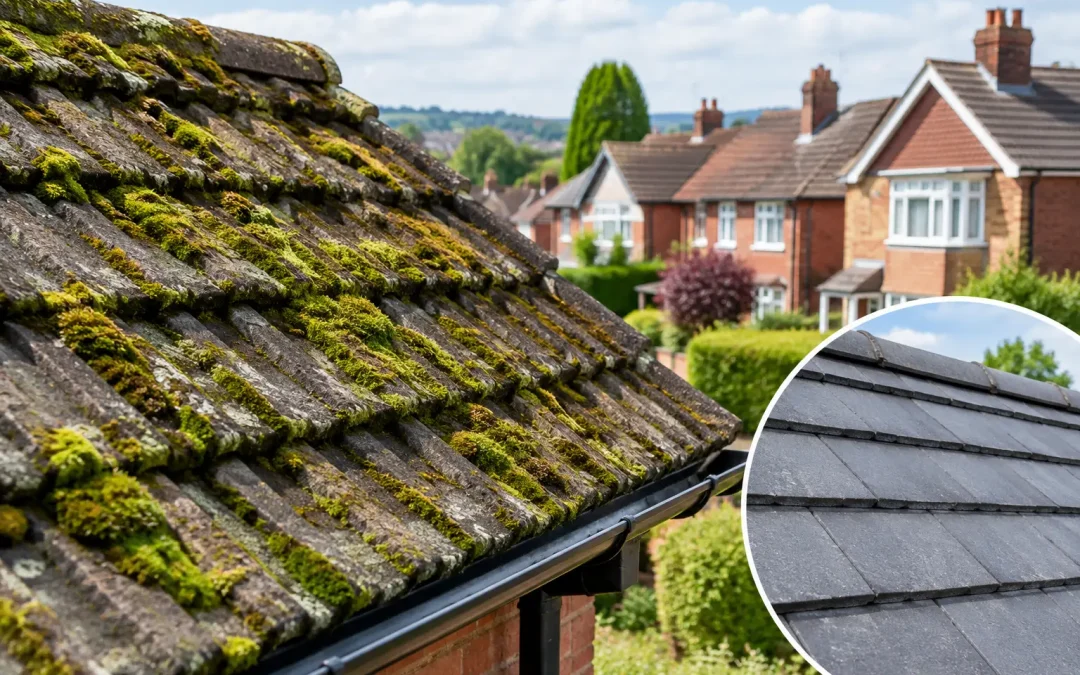
A few patches of green growth can make a roof look older than it is, but does roof moss damage tiles in a way that should worry a homeowner? In some cases, yes. Moss is not always the original cause of a roofing problem, yet it holds moisture against the roof surface and can expose weaknesses in ageing tiles, fixings and roofline details.
For homeowners considering a complete re-roof, the presence of moss is worth taking seriously. It can be a visible sign that tiles have become porous, the roof is slow to dry, or the roof covering is reaching the point where ongoing cleaning and small-scale attention no longer represent good value.
Does Roof Moss Damage Tiles Over Time?
Moss does not normally eat through a sound roof tile. However, it can create the conditions in which tiles deteriorate more quickly. It absorbs rainwater and keeps the tile surface damp for longer, particularly on north-facing slopes, beneath overhanging trees and in areas with limited sun.
That prolonged dampness matters on older concrete tiles and weathered clay tiles. Repeated wetting, drying and winter frost can gradually wear the surface. Where a tile is already cracked, delaminating or becoming porous, moisture held by moss can make the problem worse. Frost may then expand trapped water in fine cracks, leading to further damage or broken edges.
Moss can also grow beneath the lower edge of adjacent tiles. As it thickens, it may lift tiles very slightly or interfere with the way they sit together. This is more likely on a roof that already has worn fixings, uneven tiles or areas affected by previous movement. Even a small gap can allow wind-driven rain to reach the roofing underlay and battens beneath.
The key point is that moss is often part of a wider picture. A newer, well-installed roof may have some moss without being structurally compromised. On a roof that is already 20, 30 or more years old, widespread growth can sit alongside other signs of decline.
Why Moss Causes Trouble Beyond the Tiles
The visible growth on the roof is only one concern. During heavy rain, clumps of moss can break away and collect in gutters, downpipes and gullies. Blocked guttering can overflow against fascias and soffits, soak external walls and leave water running where it should not.
This is particularly frustrating because the roof may appear to be the problem when the immediate issue is poor drainage. If gutters are old, sagging or frequently blocked, replacing them alongside a roof replacement can provide a cleaner, more reliable finish. New fascias, soffits and guttering also give the roof edge the proper protection and ventilation it needs.
Moss can hide the condition of the tile surface, too. From ground level, it may conceal cracked tiles, failed ridge bedding, worn valleys or uneven areas where the roof structure has settled. Removing it without a careful inspection can reveal that the roof needs more than a clean.
Moss does not always mean replacement
It is sensible not to assume that every moss-covered roof needs replacing. A small amount of growth on an otherwise sound roof can often be managed through sensible maintenance, including keeping gutters clear and reducing heavy shade where practical.
The decision changes where moss is widespread and the roof has several signs of age. If tiles are breaking regularly, the covering looks uneven, water is getting into the loft space, or the underfelt is deteriorating, investing in another clean may only delay a larger job. An honest roof assessment should distinguish between surface growth and a roof that has reached the end of its useful life.
Signs Your Mossy Roof May Need a Closer Look
Homeowners do not need to climb onto a roof to spot potential concerns. Look from a safe position and pay attention to changes over time. Moss on its own is not proof of failure, but it is more concerning when it appears alongside several of the following issues:
- cracked, slipped, missing or visibly uneven tiles
- dark damp patches or staining on ceilings and loft timbers
- frequent gutter blockages and water overflowing at the eaves
- crumbling mortar around ridge or hip tiles
- a roof that is nearing the expected end of its serviceable life
- rotten, peeling or damaged fascias and soffits
A roof can also look tired without actively leaking. Porous tiles, weakening underlay and ageing battens may not show themselves indoors until a spell of wind-driven rain exposes the issue. That is why an early professional assessment can be more useful than waiting for water to enter the property.
Should You Have Moss Removed?
Moss removal can improve appearance and help reduce gutter blockages, but the method matters. Aggressive pressure washing is not automatically the right answer for an older tiled roof. High pressure can dislodge tiles, strip protective surfaces from concrete tiles, disturb mortar and force water beneath the covering.
Manual removal and suitable roof treatments may be appropriate where tiles remain sound and the roof has plenty of life left. Even then, the work should be planned carefully, with safe access and an understanding of the roof’s condition.
Where a roof is brittle, heavily weathered or already affected by cracked tiles, cleaning can become a poor investment. It may leave the roof looking better for a short time while doing nothing to address failing materials beneath. Homeowners should be cautious of quick fixes presented as a long-term solution.
Tree cover and roof orientation make a difference
Some properties are naturally more prone to moss. Roof slopes facing north or east can stay damp longer, while nearby trees reduce sunlight and drop leaves into gutters. This does not mean the roof has been poorly installed, but it does mean regular checks are sensible.
Trimming back overhanging branches where appropriate can help improve light and reduce leaf build-up. It is still important to avoid work that risks damage to the roof or overlooks local restrictions affecting protected trees. Good drainage and a sound roof covering remain more important than trying to eliminate every trace of moss.
When a New Roof Is the Better Long-Term Choice
A complete roof replacement becomes worth considering when the roof covering, underlay, battens and roofline are all showing their age. Rather than repeatedly paying for cleaning, isolated tile work and gutter clearing, a new roof provides the chance to deal with the whole system properly.
A professional re-roof can include new tiles or slates suited to the property, breathable membrane, treated battens, secure fixings and properly finished ridge, verge and valley details. It also allows the condition of the roof structure to be checked before the new covering goes on. Where needed, replacement fascias, soffits and guttering can be completed as part of the same project.
This approach is especially worthwhile for homeowners planning to stay in their home, preparing it for sale, or improving an older property that has started to need regular attention. A properly installed new roof should improve weather protection, appearance and confidence in the condition of the home.
For flat roofs, moss may collect around edges or where drainage is poor, but standing water, splits, blistering and failing joints are usually more significant warning signs. A flat roof replacement can provide a more dependable surface and improved drainage rather than relying on repeated patching.
Get Clear Advice Before Deciding
The right answer depends on the roof’s age, tile condition, drainage and the extent of any underlying deterioration. A proper assessment should explain what is sound, what needs attention and whether maintenance is realistic or a full replacement would offer better value.
MTF Roofing provides straightforward assessments and free, no-obligation quotations for homeowners across Nottinghamshire, Derbyshire and the wider Midlands. With more than 15 years of hands-on experience, the focus is on doing the job properly, using quality materials and leaving every property clean and cared for.
If moss is making you question the condition of your roof, do not rely on appearances alone. A careful inspection can give you the information needed to protect your home and make a confident long-term decision.
If your roof is showing signs of age or widespread deterioration, take a look at our new roof installation and replacement services to see how MTF Roofing can help. We provide free, no-obligation quotations across Nottinghamshire and Derbyshire. Get in touch to arrange an assessment and discuss the best option for your home.