A flat roof that leaks, feels cold beneath your feet or has reached the end of its working life is rarely a job for a quick patch. When planning a replacement, the choice between warm versus cold roofs affects how the roof is insulated, how it handles moisture and what work is needed around the edges, outlets and roofline.
For many homes, a warm roof is now the preferred approach for a full flat roof replacement. That does not make it the right answer in every case. The existing structure, available height at door thresholds, ventilation, budget and the room below all need to be considered before the new roof is specified.
What is a warm roof?
A warm roof places the insulation above the roof deck. In a typical flat roof build-up, the structure is covered with a vapour control layer, rigid insulation boards and a weatherproof roof covering. The deck and supporting timbers remain on the warm side of the insulation, which is where the name comes from.
This arrangement reduces the chance of warm, moist air from inside the property meeting a cold surface within the roof structure. That is helpful in rooms that produce more moisture, such as kitchens, bathrooms and utility rooms, although good extraction and ventilation inside the home still matter.
Because the insulation sits above the deck, there is normally no need for a ventilated void between the insulation and roof covering. This makes the construction more straightforward to manage than a poorly ventilated cold roof, provided the layers are correctly fitted and sealed.
A warm roof also gives the installer access to the roof build-up from above. On a planned replacement, this can allow a complete new system to be installed while keeping disruption inside the home to a minimum.
Why warm roofs are often chosen for replacements
A well-designed warm roof provides a continuous layer of insulation across the roof area. This limits cold spots around joists and helps improve comfort in the room below. If an extension, garage conversion or dormer room is difficult to heat in winter or overheats quickly in summer, the roof construction may be a major part of the problem.
Warm roof systems can also be well suited to modern flat roof coverings. The key is not simply choosing a material, but ensuring the deck is sound, the insulation thickness is appropriate, falls direct water to the outlets and all perimeter details are properly finished.
There is a practical benefit at roof edges too. A full replacement is an opportunity to check fascia boards, soffits, gutters and downpipes. Water needs to leave a flat roof cleanly. New roofing will not perform as it should if it drains into blocked, poorly positioned or failing guttering.
What is a cold roof?
A cold roof places the insulation below the roof deck, usually between or beneath the ceiling joists. The roof deck above it remains cold during the winter months. A clear, ventilated air gap is therefore needed between the insulation and deck so moisture can escape rather than collecting within the structure.
Cold roofs are commonly found in older flat roof constructions. They can work when correctly designed and maintained, but they rely on ventilation remaining open and the insulation being installed without blocking the required air path. In practice, this is where problems can develop over time.
If insulation is added from inside without proper planning, the ventilation void can be reduced or closed off. Warm air from the house can then reach the colder deck, leading to condensation. Left unaddressed, this may contribute to damp staining, mould, timber decay and a shortened life for the roof.
When a cold roof may still be appropriate
There are situations where a cold roof can be considered. A garage or unheated outbuilding may not need the same level of thermal performance as a habitable room. Limited height around a doorway, roof lantern or neighbouring detail can also make adding insulation above the deck more difficult.
However, a cold roof should not be selected simply because it appears cheaper at the outset. Any saving needs to be weighed against the need for correctly formed ventilation, careful internal insulation work and the risk of future condensation if the build-up is not right. For a substantial replacement over a heated room, a warm roof is often the more dependable long-term solution.
Warm versus cold roofs: the key differences
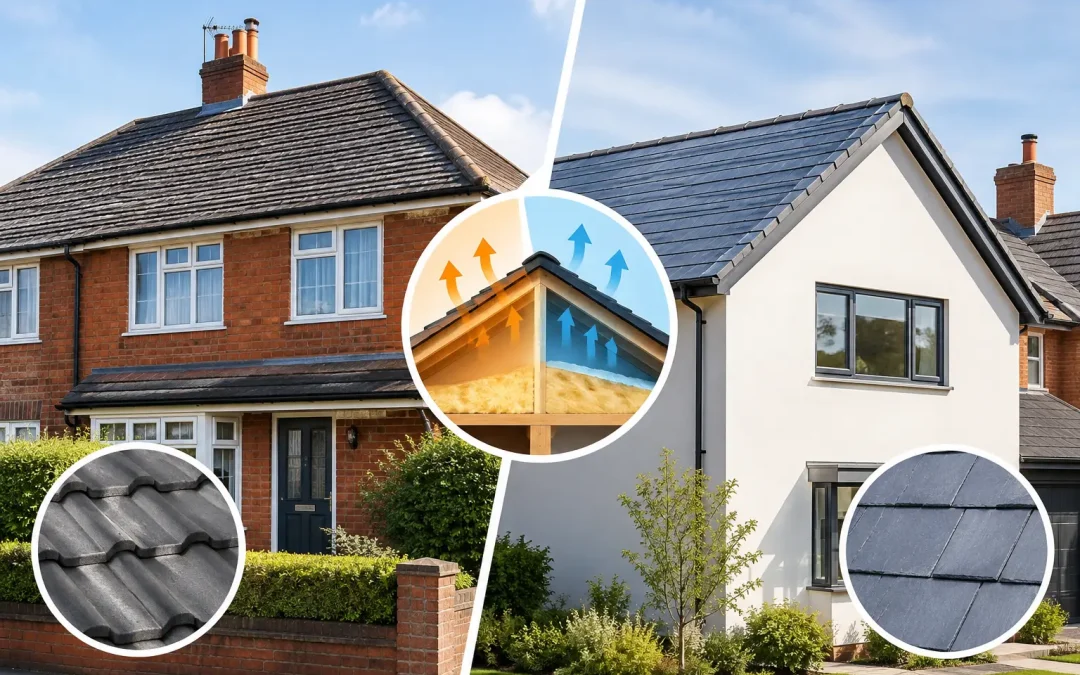
The main difference is where the insulation sits. With a warm roof, it is above the deck. With a cold roof, it is below the deck and ventilation is required above the insulation.
That difference affects both performance and installation. A warm roof generally offers better control over thermal bridging because the insulation can run continuously across the structure. A cold roof can be more dependent on careful fitting between joists, and gaps around timbers can allow heat to escape.
Condensation risk is another important distinction. A correctly installed warm roof keeps the deck warmer, reducing the conditions in which condensation forms. A cold roof depends on a well-maintained ventilated void. Neither arrangement is foolproof if it is badly installed, but warm roof construction is generally more forgiving on a full replacement.
Cost is less straightforward. A warm roof may involve more materials and additional work to raise the roof level, alter edge trims or adjust flashing details. Yet it can provide improved insulation, reduce internal disruption and avoid the complications of creating ventilation beneath the deck. The right comparison is the cost of a properly built roof that will last, rather than the lowest initial price.
Things to check before choosing a new flat roof
A contractor should assess more than the visible roof covering. The condition of the existing deck and supporting timbers matters, especially where there have been recurring leaks, ponding water or signs of sagging. Any rotten or weakened material should be dealt with as part of the replacement, not covered over.
Roof height is equally important. A warm roof build-up raises the finished level, which can affect door openings, step details, flashing at walls and the position of guttering. This does not rule out a warm roof, but it means the edges need to be planned properly from the start.
Drainage should be reviewed as well. Water that remains on a flat roof for long periods puts extra strain on the covering and can expose weak points sooner. In some cases, improving the fall of the roof is sensible during replacement. Outlets, gutters and downpipes should be checked as one system.
For roofs over a heated space, insulation standards may also apply under Building Regulations. The precise requirements depend on the project, the existing roof and the proposed work. A professional assessment helps ensure the build-up is suitable before installation begins.
Do these terms apply to pitched roofs too?
They can, but the conversation is slightly different. In many traditional pitched roofs, insulation is laid at ceiling level in the loft, leaving the loft space cold and ventilated. Where a loft is being converted into a room, insulation may be installed at rafter level instead so the space becomes part of the heated envelope.
For homeowners considering a complete pitched roof replacement, the best insulation approach depends on whether the loft is used for storage only, remains ventilated, or forms part of the living accommodation. It is worth discussing this before the new covering is fitted, as a re-roof is a sensible time to address insulation, ventilation and roofline details together.
Choosing a roof that suits the property
The best roof construction is not a one-size-fits-all decision. A warm roof is commonly the stronger option for replacing a flat roof over a heated extension, particularly where comfort, energy efficiency and long-term moisture control are priorities. A cold roof may suit certain unheated spaces or restricted details, but only when ventilation can be achieved properly.
At MTF Roofing, a full roof assessment looks at the whole job: the existing roof structure, insulation requirements, drainage, coverings and the condition of the surrounding fascias, soffits and guttering. Homeowners across Nottinghamshire and Derbyshire can request a free, no-obligation quotation for a clear recommendation based on their property.
A new roof is a long-term investment in the home. Taking the time to choose the correct build-up before work starts gives it the best chance of keeping the property dry, comfortable and properly protected for years to come.